
We Recycle
A National Partnership for Sustainable Materials Management: The WE RECYCLE programme is a collaboration between the Government of the Virgin Islands and Green VI, established to identify and optimise the most effective recycling frameworks for the territory. Our shared mission is to safeguard public health, foster local job creation, reduce waste and provide raw materials to fuel sustainable BVI enterprise. By demonstrating operational best practices in island-scale materials management, the programme provides a living blueprint for the future.
HOW WE DO IT
The Bridge to National Waste Solutions: The Test Recycling Centres serve as a vital bridge, supporting the transition toward the Government’s new National Waste Management Strategy. Processing equipment for plastics and aluminium collected by the WE RECYCLE programme is now fully operational at the centres on both Tortola and Virgin Gorda, alongside machinery designed to convert recycled materials into value-added local products. Beyond immediate diversion, these centres function as data hubs – gathering essential insights on recycling volumes, market values, operational challenges, and costs – to inform and optimise future national infrastructure.
7 Rs


Recycling Tips


We Recycle Map
MILLION PLASTIC WATER BOTTLES DIVERTED
RECYCLING POINTS TORTOLA & VG
TONS GLASS, PLASTIC, LANDSCAPE & FOOD WASTE UPCYCLED LOCALLY
TONS OF RECYCLABLES DIVERTED
Featured Upcycling Projects
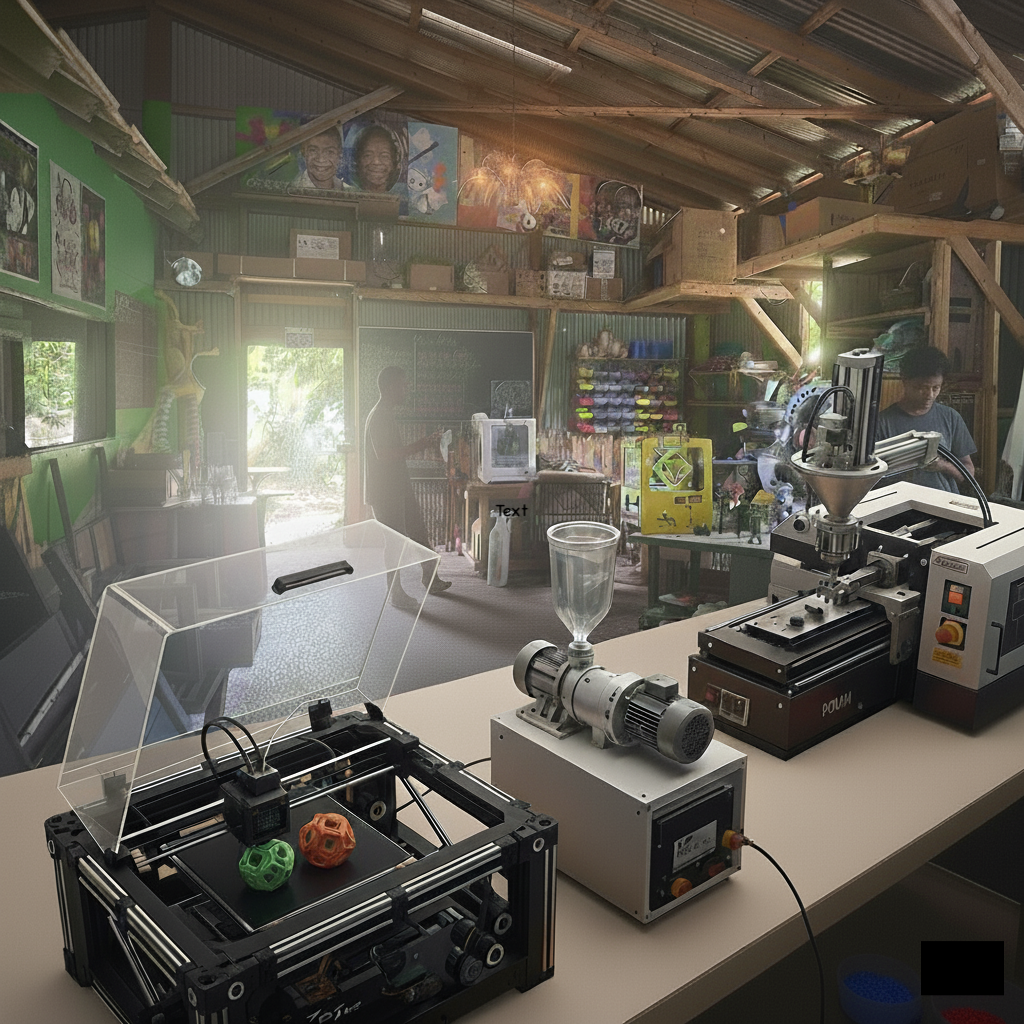
Plastic Fab Lab
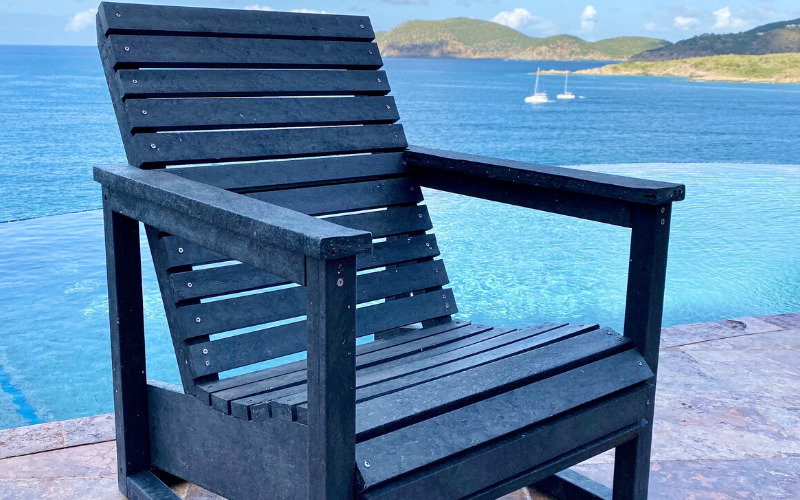
Circular Manufacturing in Action: The Plastic Fab Lab serves as a localized, circular manufacturing hub that transforms source-separated plastics into high-value, durable BVI products. Operating as a practical extension of the territory-wide WE RECYCLE programme, this facility utilizes specialized processing equipment to shred, extrude, press, and remold recovered plastic into functional local commodities. By converting a complex material stream into practical community assets, the Fab Lab demonstrates the tangible economic and environmental viability of keeping resources on-island.
Organics Hubs
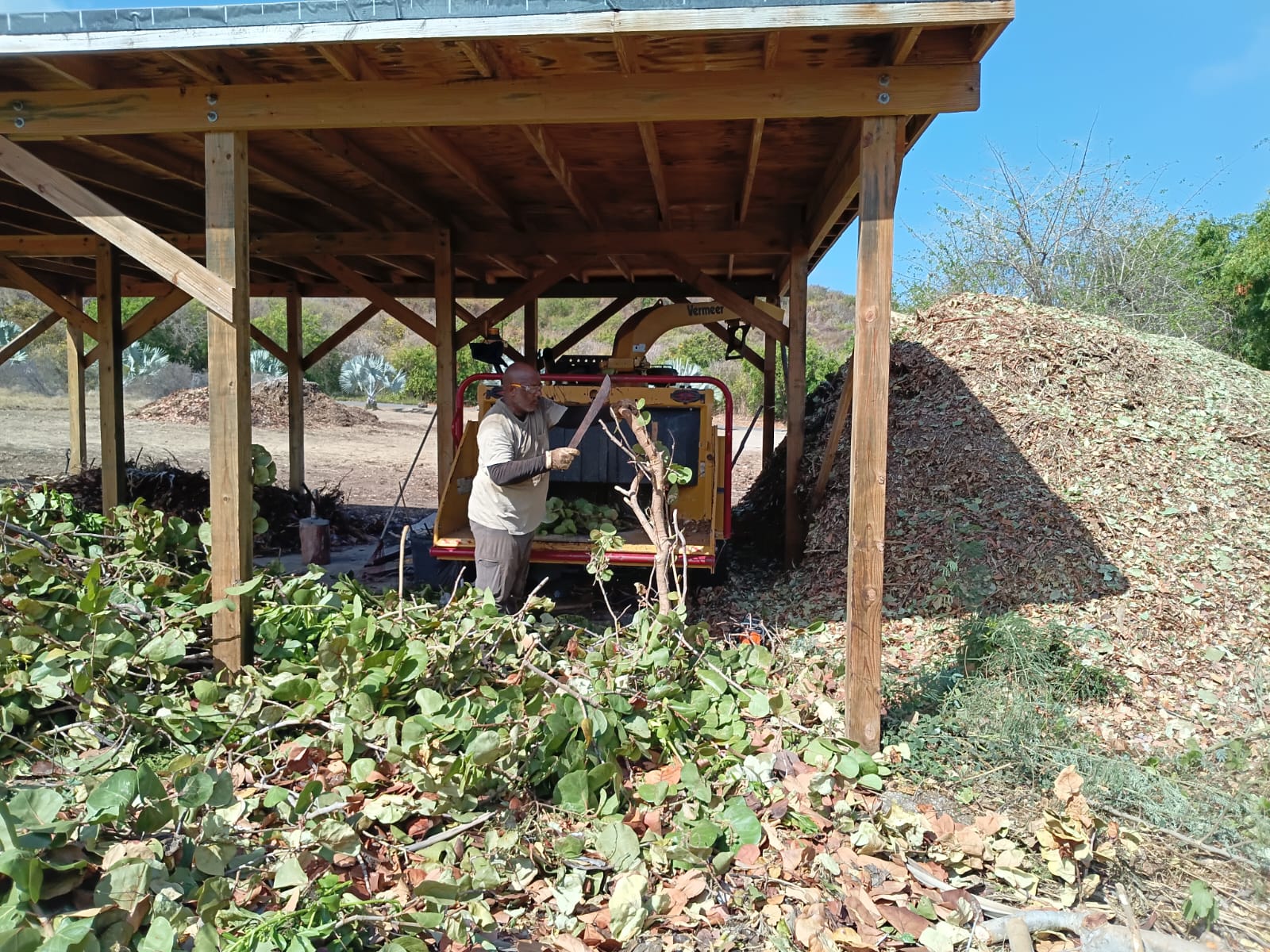
Building BVI “Black Gold”: On Tortola and Virgin Gorda, collaborative Organics Projects are actively diverting landscape waste to manufacture high-quality local mulch, replacing imported soil amendments with home-grown solutions. At the community level, our EcoParks and School Gardens host active composting systems that divert food scraps from local homes and restaurants, building nutrient-rich “Black Gold” to nourish local crops. Looking ahead, scaling operations to incorporate sargassum seaweed and cardboard processing will further close the loop – reducing landfill hazards while turning island-wide organic waste into local agricultural resilience.
Glass Project
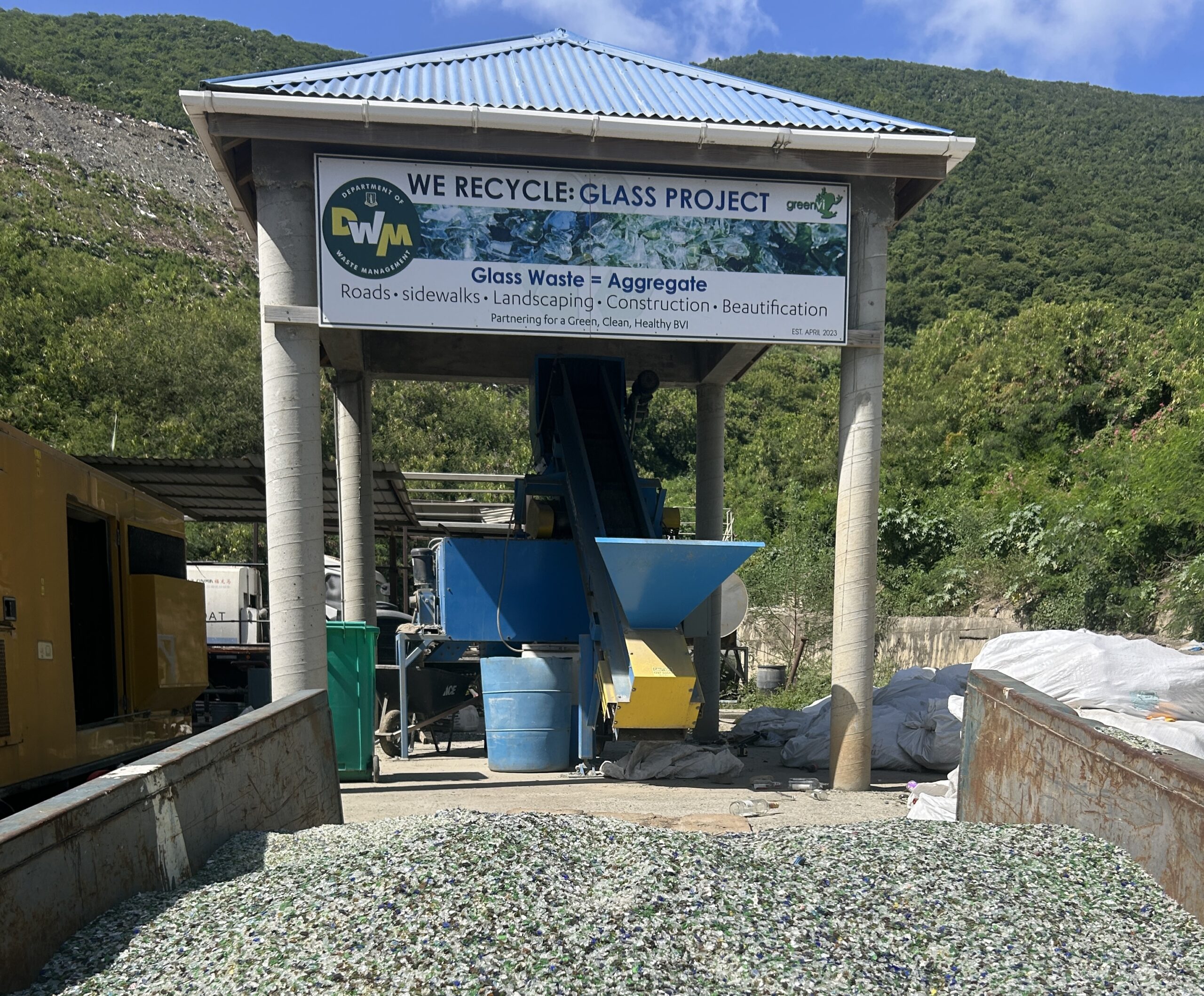
Turning Glass Waste into Island Solutions: Glass recycling in the BVI is evolving from an environmental necessity into a local economic engine. Through the operation of the We Recycle’s Andela Glass Crusher, collected glass is processed into functional aggregate -currently serving a critical safety function as fill material at the Pockwood Pond Dumpsite to suppress fire risks. The next phase of this circular model connects raw materials directly to local industry: partnering with Blockworks VI to supply glass sand for concrete block manufacturing, with every block diverting roughly six beer bottles from the waste stream. Looking ahead, Green VI is laying the groundwork for a Glass Lab and re-establishing the Glass Studio to unlock further commercial and educational uses for recycled glass.
What We Recycle & Upcycle
To complement our WE RECYCLE program, we work with local entrepreneurs to increase Upcycling in the BVI. Here’s how waste streams are currently being managed. Click below to find out more:


GLASS
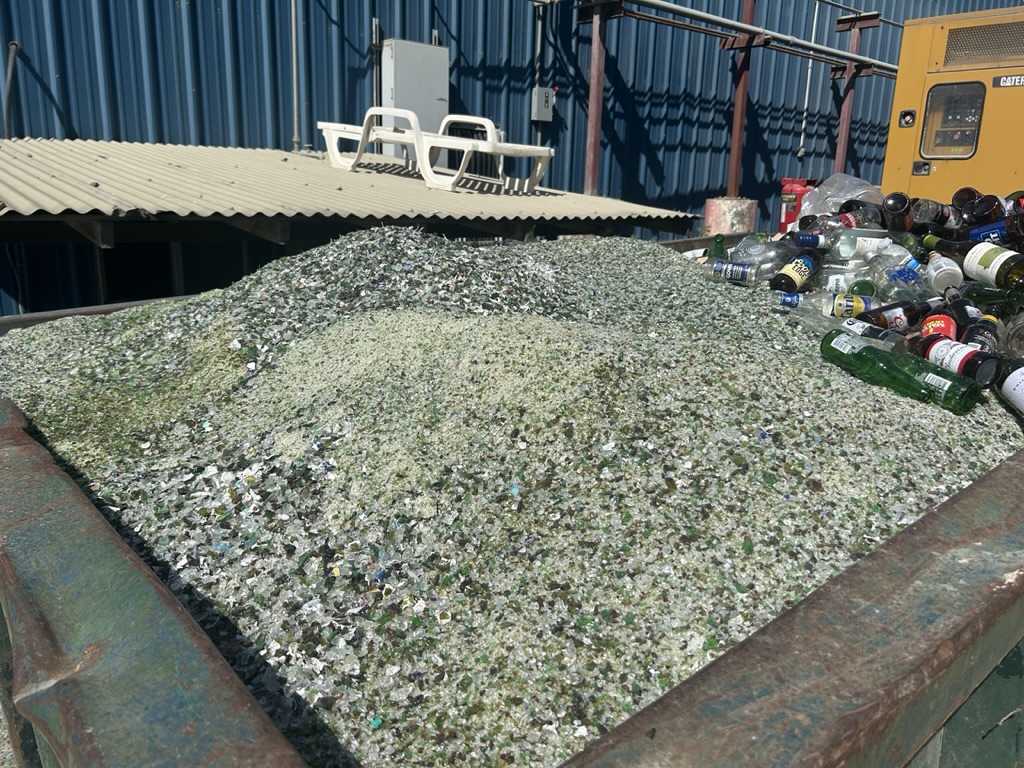
About 20% of the BVI waste/resource stream is glass. Glass bottles that end up at the dumpsite take up significant space in the limited available area. On Tortola, the public incinerator is shut down for approximately 20 days each year while the Department of Waste Management’s Staff manually chips off glass that has melted onto the incinerator walls. During this shutdown, incoming waste is stored or burned behind the incinerator, creating additional health hazards, such as toxic smoke, flies, and vermin. The primary strategy for upcycling glass waste in the BVI is crushing it into glass aggregate. On a smaller scale, glass can be upcycled as reusable containers and art applications.
PLASTIC
Plastics account for roughly 20% of the BVI’s waste stream and represent the highest percentage of litter across our islands. Beyond aesthetic impact, unmanaged plastic containers collect stagnant rainwater, creating prime
Supporting this physical infrastructure, legislative frameworks have been drafted to restrict specific single-use plastics across the territory. By pairing policy development with advanced local processing at our Plastic Fab Lab, we are turning a critical environmental liability into a localized economic resource.
ALUMINIUM
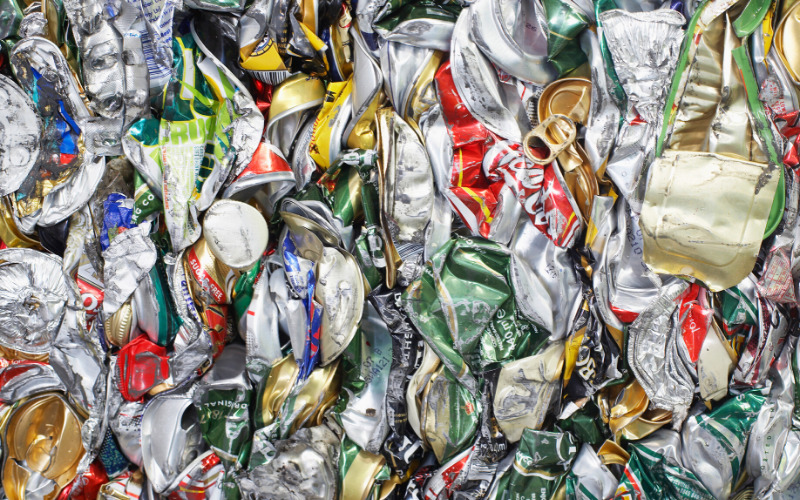
About 2% of BVI waste consists of aluminium cans. Most of these are beverage cans, but they can also be food cans. Used beverage cans are baled for export to countries with the capacity to smelt and make new aluminium cans. Recycling aluminium cans (excluding transportation) results in 90% energy savings compared to mining and extracting virgin ore.



ORGANICS
Approximately 40% to 50% of the BVI’s waste stream is compostable. Food scraps, landscaping debris, cardboard, and paper represent a massive volume of valuable nutrients that can be captured and put back to work on-island instead of being lost to the waste stream. Diverting these organic materials is critical: rotting food and green waste in dumpsites generate flammable methane gas, fuel dangerous fires, attract vermin, and produce foul odors.
With the right processing systems in place, we can halve what currently goes to the incinerator or dumpsites, transforming a landfill hazard into a useful local commodity. Why import mulch, fertilizers, and compost when we can produce our own rich “Black Gold” right here in the BVI?
Get Started at Home: Composting in your own backyard or garden is simple, effective, and directly protects our islands.
TEXTILES
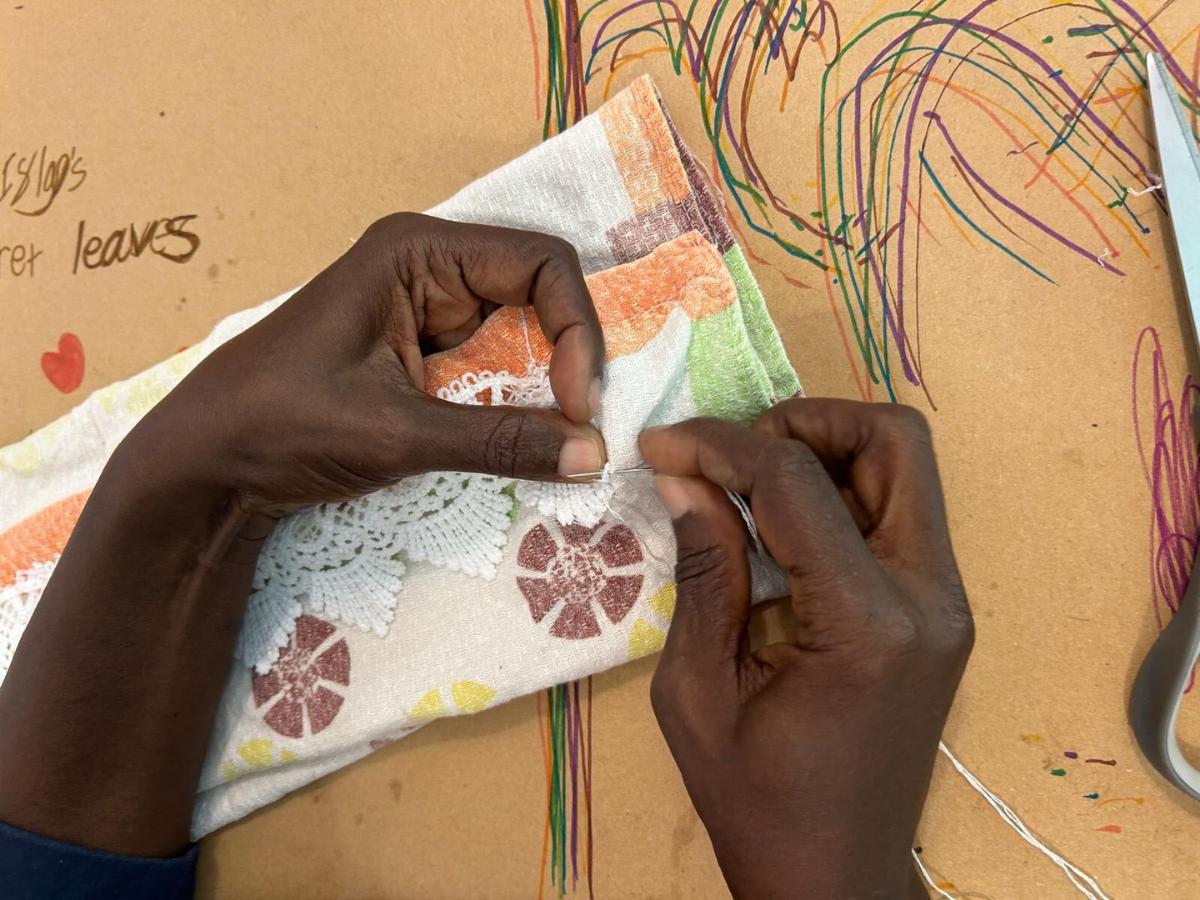
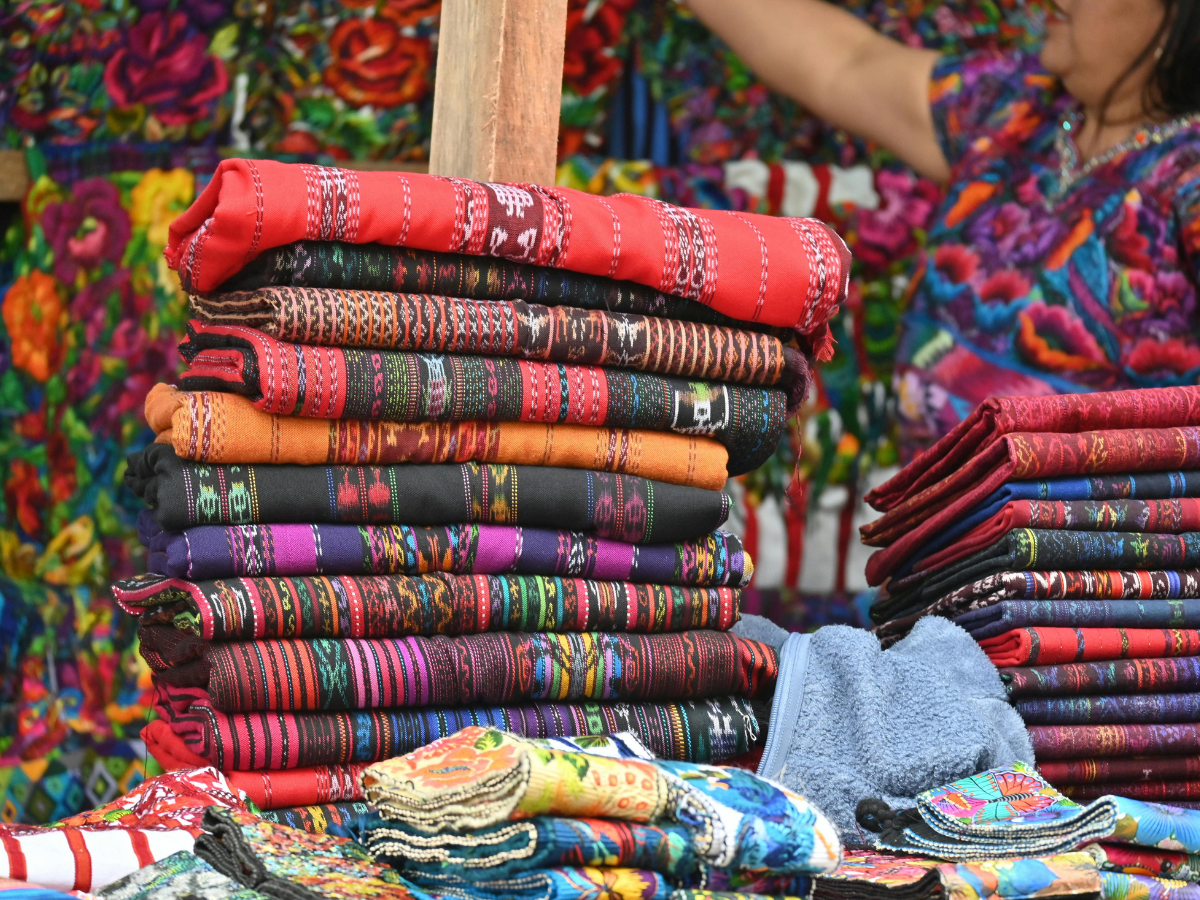
Green VI is partnering to catalyse a circular textile system across the British Virgin Islands by transforming discarded fabrics, sails, and textiles into valuable local products. This initiative will divert textile waste from our dumpsites while establishing green jobs and sustainable micro-manufacturing opportunities across our islands. Upcycling these post-consumer materials produces durable, functional goods – including custom shade sails, reusable tote bags, industrial cleaning rags, and home furnishings – proving that waste can drive local climate adaptation.
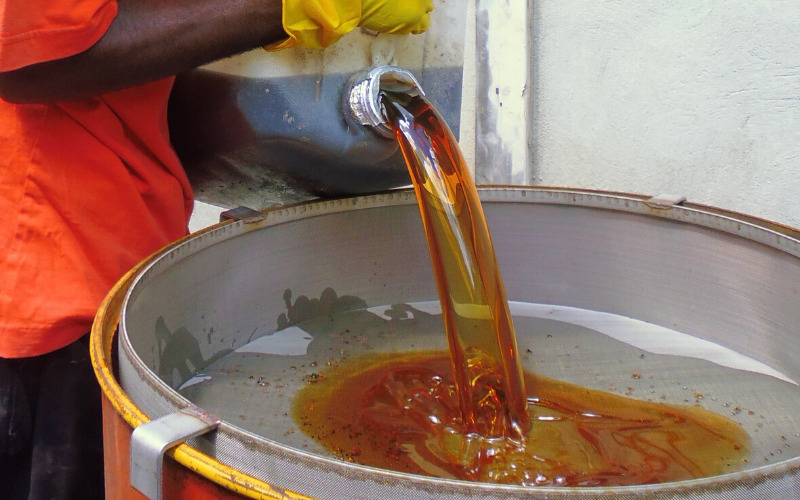
USED OIL
Unmanaged oils represent a severe risk to island infrastructure and coastal health, but with proper systems, they can be converted into local energy assets.
- Used Vegetable Oil (UVO): BVI restaurants generate thousands of gallons of UVO annually. When poured down drains, cooling grease solidifies inside concrete-embedded pipes – causing massive blockages, toxic sewage overflows, and costly structural repairs. Traditionally shipped off-island or disposed of in dumpsites, UVO holds immense potential to be processed locally into high-grade biofuel for generators and vehicles.
- Used Motor Oil: Commercial and private vehicle fleets generate significant volumes of hazardous motor oil. While government contracts have recently facilitated collecting and shipping these oils off-island for safe processing, a long-term, self-reliant strategy is required.
A dedicated Used Oil Working Group has been established to address both vegetable and motor oils across the Territory. This multi-sector taskforce focuses on optimising collection networks, mitigating infrastructure damage, and evaluating local processing technologies to convert discarded oils into usable BVI energy.
SHIPPING PALLETS
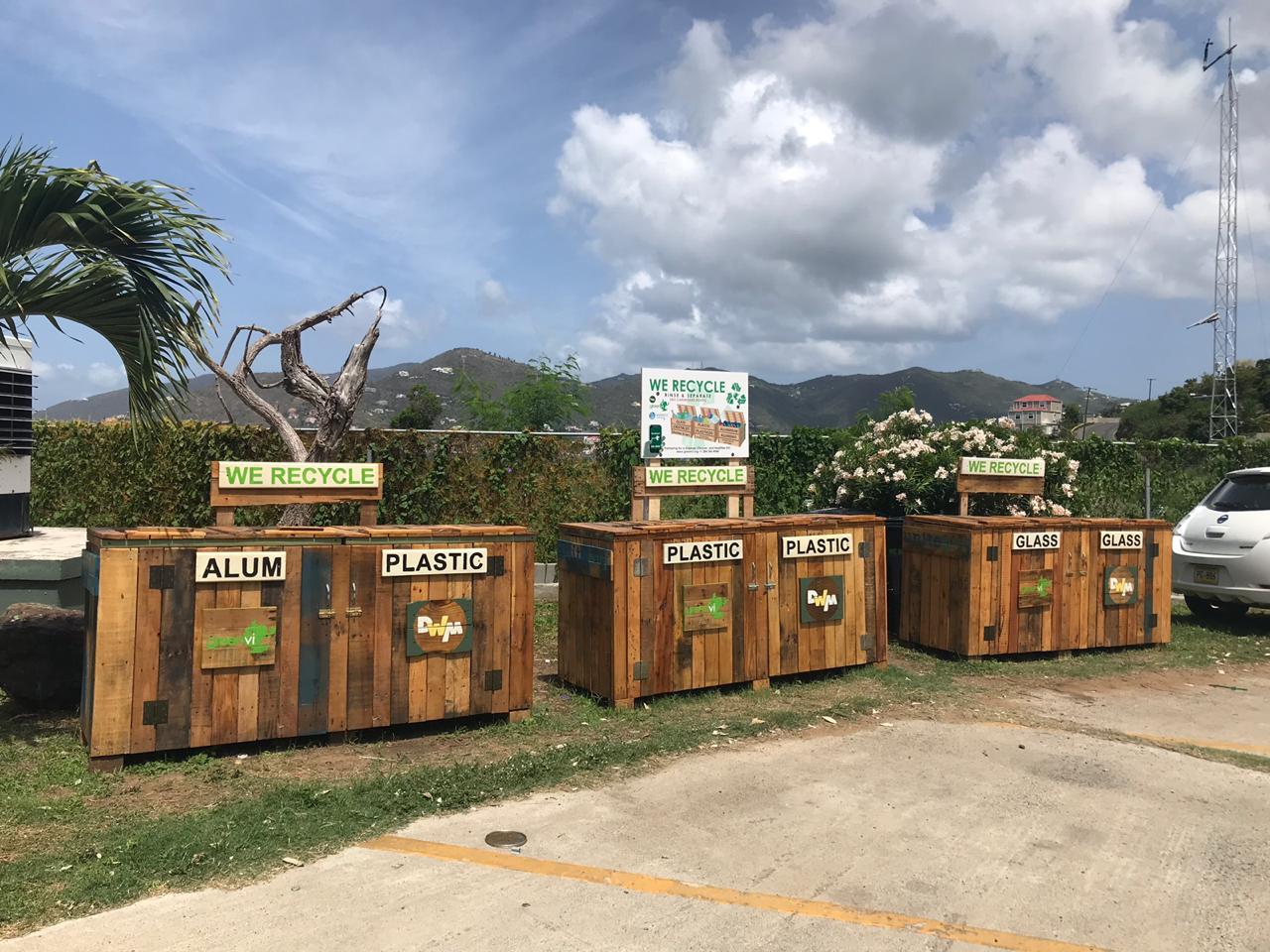
Due to high importation rates across the Territory, wooden shipping pallets represent a significant portion of the BVI’s bulky waste stream. Green VI transformed pallets into the foundational collection infrastructure for the BVI – building the territory’s very first WE RECYCLE community sorting bins.
Today, this versatile resource continues to inspire local artisans to craft custom furniture. To see functional upcycling in action, visit the Tortola EcoPark to experience our unique pallet boardroom and community seating area – a demonstration of circular design.
SCRAP METAL
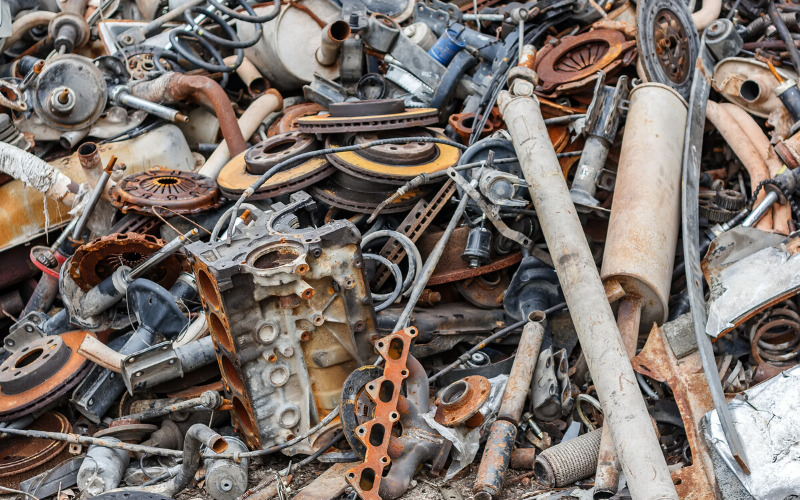
Salt air can take its toll on large appliances and cars. Currently, scrap metal recyclers and the Department of Waste Management help collect, reuse, and export steel and other metals. This was especially important after the hurricanes, as appliances in flooded houses and derelict vehicles were virulent mosquito breeding grounds.
TYRES
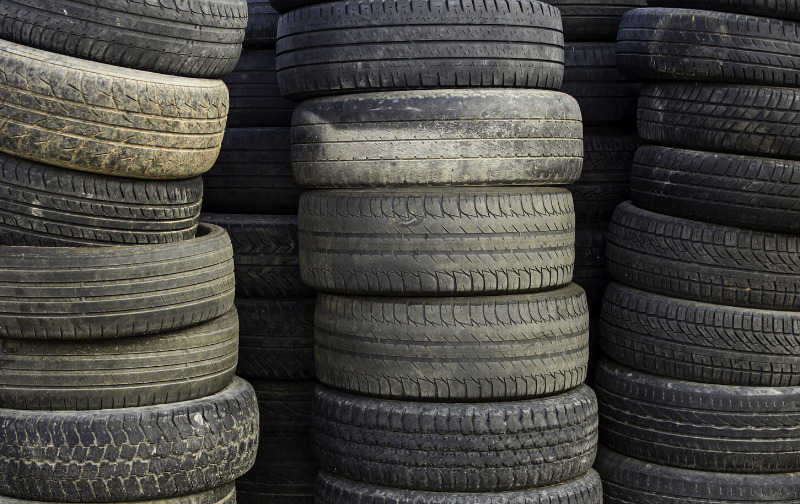
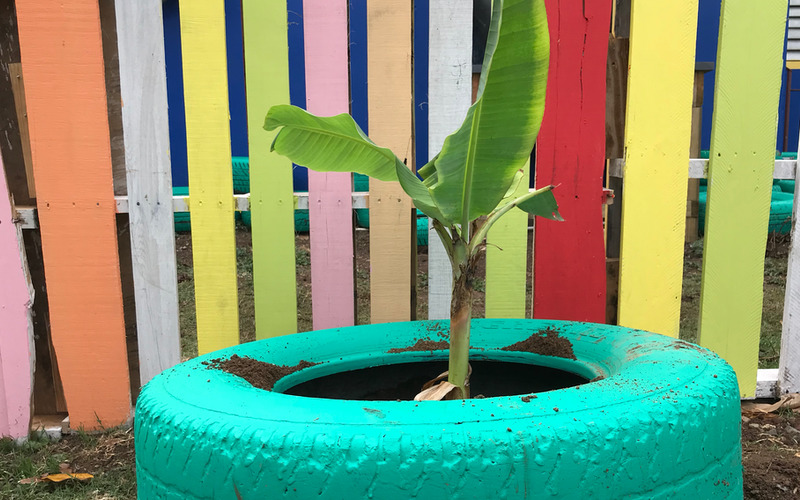
While currently diverted on a small scale, end-of-life tyres are creatively upcycled into durable planters and play equipment for local school gardens and community spaces. To address larger volumes across the Territory, Green VI is supporting the establishment of a dedicated working group to develop island-wide, long-term tyre management and recycling solutions.
Featured Entrepreneurs
Blockworks VI
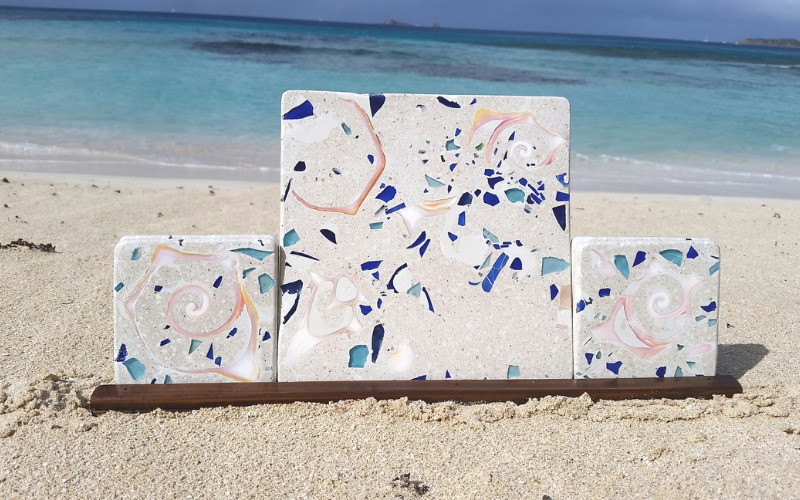
Based on Virgin Gorda, Blockworks VI makes unique products for homeowners and tourists from concrete, recycled glass, conch and whelk shells. An exciting new cement block product line is being developed, which will use substantial quantities of glass waste.

Annie MacPhail Bags
Annie MacPhail bags, home accents and accessories are designed and manufactured in the BVI from salvaged/retired sails, kite board kites, ropes and other remnants. Annie’s flagship retail outlet is inside Nutmeg & Co. in Road Town, Tortola. Her custom-made goods are also found at outer-island resorts and in the USVI.
FEATURED VIDEOS
PROMAR
Implemented locally by Green VI in partnership with the Ministry of Environment, Natural Resources and Climate Change (MENRCC), the PROMAR (Prevention of Marine Litter in the Caribbean Sea) project is a vital regional initiative tackling plastic pollution at its source. Funded by the German Federal Ministry for the Environment and supported by the United Nations Environment Programme – Cartagena Convention Secretariat and adelphi, this multi-nation framework protects our critical blue economy by driving circular economy solutions to intercept single-use plastics and packaging before they ever reach our waters.